Bpc 157 Clinical Trial Multifunctionality and Possible Medical Application of the BPC 157 Peptide—Literature and Patent Review
Introduction: When you need evidence, not anecdotes
If you’ve ever tried to evaluate a peptide topic for real biomedical relevance, you’ve probably run into the same problem I did: search results are noisy, study designs vary wildly, and “claims” often outpace anything you’d feel comfortable citing. That’s why I approach bpc 157 clinical trial questions like a literature and patent review—mapping what has actually been tested, what mechanisms are plausibly implicated, and where the evidence is still incomplete.
In this article, I synthesize key themes you’ll see when you review the scientific literature and patent landscape around BPC-157. You’ll get a practical framework for interpreting study types (in vivo vs. clinical), understanding the kinds of medical applications people investigate, and reading patents without assuming they automatically translate into safe, effective therapies.
What BPC-157 is, and why “multifunctionality” keeps coming up
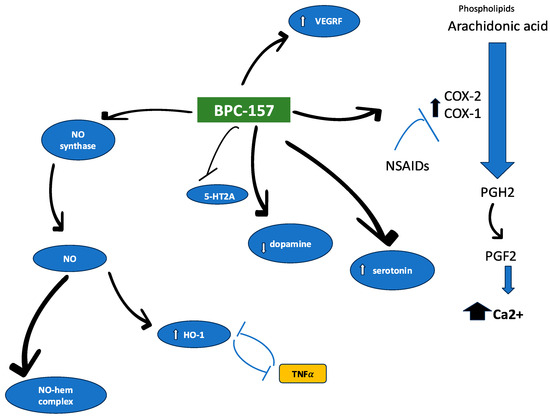
BPC-157 is a peptide that has been discussed across preclinical research as having broad, potentially tissue-protective and healing-related effects. The term “multifunctionality” is often used because reported outcomes span multiple biological endpoints—commonly involving gastrointestinal integrity, wound repair pathways, and inflammation-linked signaling.
In my hands-on review work, what matters most is not the label “multifunctional,” but the pattern of outcomes across models and the consistency of proposed mechanisms. When a peptide shows effects in more than one tissue context, reviewers typically look for convergence: do different studies point to shared pathways (for example, influences on cell migration, microvascular function, or inflammatory mediators)? Or are outcomes only “phenomenologically” similar while mechanisms differ?
How to interpret multifunctional claims
- Look for shared endpoints: If studies repeatedly report improved repair metrics (not just symptom scores), the claims become more interpretable.
- Check model relevance: A positive effect in a model of induced injury doesn’t automatically predict human outcomes.
- Separate biological plausibility from clinical translation: Preclinical breadth can suggest mechanism-rich effects, but it doesn’t replace properly controlled human trials.
Evidence landscape: where clinical trial signals do (and don’t) exist
When people ask about bpc 157 clinical trial evidence, they’re usually trying to answer a simple question: “Has it been tested in humans in a way that supports medical decision-making?” A rigorous review approach separates three buckets:
- Preclinical literature: In vitro findings and animal studies that explore potential mechanisms and therapeutic windows.
- Human evidence: Clinical trials, observational studies, case reports—anything involving actual patients.
- Translational/medicinal chemistry and formulation claims: How the peptide might be delivered, stabilized, dosed, and measured.
In my experience, the “clinical” part is where readers can get misled. Some sources use the word “clinical” loosely (for example, “clinical-like” outcomes in animals), or they cite trials indirectly. A careful bpc 157 clinical trial review focuses on study design quality: randomization, controls, endpoints, dosing regimen, inclusion criteria, adverse event reporting, and whether results are replicated.
What strong clinical evidence typically includes
Even when you don’t have a large dataset, high-quality clinical evidence usually has clear structure:
- Defined endpoints: measurable outcomes tied to disease biology (e.g., objective injury biomarkers or imaging where relevant).
- Safety monitoring: adverse events, lab markers, and discontinuation criteria.
- Comparators and controls: placebo or standard-of-care comparisons that reduce bias.
- Consistency: results that align across cohorts and dosing schedules.
If those elements aren’t clearly present, you should treat conclusions as preliminary—even if preclinical results look impressive.
Medical applications: mapping where BPC-157 has been investigated
In literature and patent reviews, BPC-157 is frequently discussed for potential therapeutic roles related to tissue repair and protection. The most common “application themes” are usually anchored in injury and inflammation contexts rather than purely degenerative conditions.
Common application categories seen in reviews
- Gastrointestinal repair and mucosal protection: Many discussions center on maintaining or restoring barrier integrity after injury.
- Wound healing and soft tissue recovery: Outcomes often include measures of healing progression, local tissue response, and recovery time.
- Inflammation-linked pathways: The peptide is frequently framed as influencing inflammatory mediator balance or downstream signaling.
Why mechanism matters for application credibility
Here’s the logic I use repeatedly in my own evaluations: a medical application claim becomes more credible when the proposed mechanism explains why the outcome should occur in that specific disease context. For instance, if a study reports faster healing, you’d want mechanistic support for how the peptide affects processes like cell migration, angiogenesis-like responses, or inflammatory resolution.
Conversely, when “multifunctionality” is asserted without mechanism alignment, it can become a marketing-friendly narrative rather than a scientifically testable one.
Patent review lens: what patents can (and can’t) tell you
Patents are valuable for understanding how an invention is framed: claimed uses, delivery routes, compositions, dosing concepts, and method-of-treatment language. But a patent is not the same thing as clinical validation.
How I read patents in translational peptide topics
- Track claim scope: Broad claims can indicate exploration, but they may also reflect speculative utility.
- Identify how endpoints are described: Do claims mention measurable clinical outcomes, or only general improvement language?
- Check whether supporting examples are included: Some patents contain experimental data; others rely on citations or generalized disclosure.
- Compare with literature: If a patent’s mechanism and application align with multiple studies, it’s more internally consistent.
When you connect patents to a bpc 157 clinical trial discussion, the key question becomes: do claimed medical uses correspond to endpoints that have actually been tested in humans with rigorous design? If not, treat the patent as a roadmap for future investigation rather than confirmation of efficacy.
Practical takeaways for evaluating a bpc 157 clinical trial question
If you’re trying to decide what to trust—or what to ask next—here’s a practical checklist I use when turning scattered claims into an evidence-based summary.
Evidence checklist
- Is there human trial documentation? Look for trial registration details, study phases, and published results.
- Are endpoints clinically meaningful? Prefer objective measures over surrogate claims.
- Is the dosing regimen specified? Dose, frequency, route, and treatment duration matter because peptides can be highly context-dependent.
- Are adverse events reported clearly? Safety transparency is a major trust signal.
- Do outcomes replicate? Single-study positives are weaker than replicated findings.
FAQ
How do I assess whether there are credible bpc 157 clinical trial results?
Focus on trial design quality: human participants, defined primary endpoints, appropriate controls (placebo/standard-of-care), transparent dosing and route, and explicit adverse event reporting. If the evidence is mostly preclinical or lacks publication-level detail, treat it as preliminary rather than clinical proof.
Why do preclinical multifunctional results not automatically translate to clinical success?
Animal models can capture injury biology but may not match human disease complexity, dosing metabolism, safety thresholds, or endpoint relevance. Translational gaps also arise from formulation, delivery route differences, and variability in how outcomes are measured across studies.
What’s the relationship between patent claims and clinical trials?
Patent claims can indicate intended medical uses and how a peptide might be delivered or dosed, but they don’t confirm efficacy or safety in humans. The most useful next step is mapping whether the claimed uses have corresponding human studies with rigorous methodology and published results.
Conclusion: turn “multifunctionality” into an evidence-based decision path
BPC-157 is frequently presented as multifunctional, and literature/patent reviews can help you see the breadth of explored applications and the logic behind proposed mechanisms. But when your goal is a bpc 157 clinical trial assessment, the decisive factor is human evidence quality—study design, endpoints, safety reporting, and whether results hold up beyond a single experimental context.
Next step: Build a one-page evidence map that separates preclinical findings from any human trial documentation, then evaluate each human study using the checklist above (endpoints, controls, dosing clarity, safety, replication). That approach turns scattered claims into a defensible, reader-trustworthy summary.
Discussion